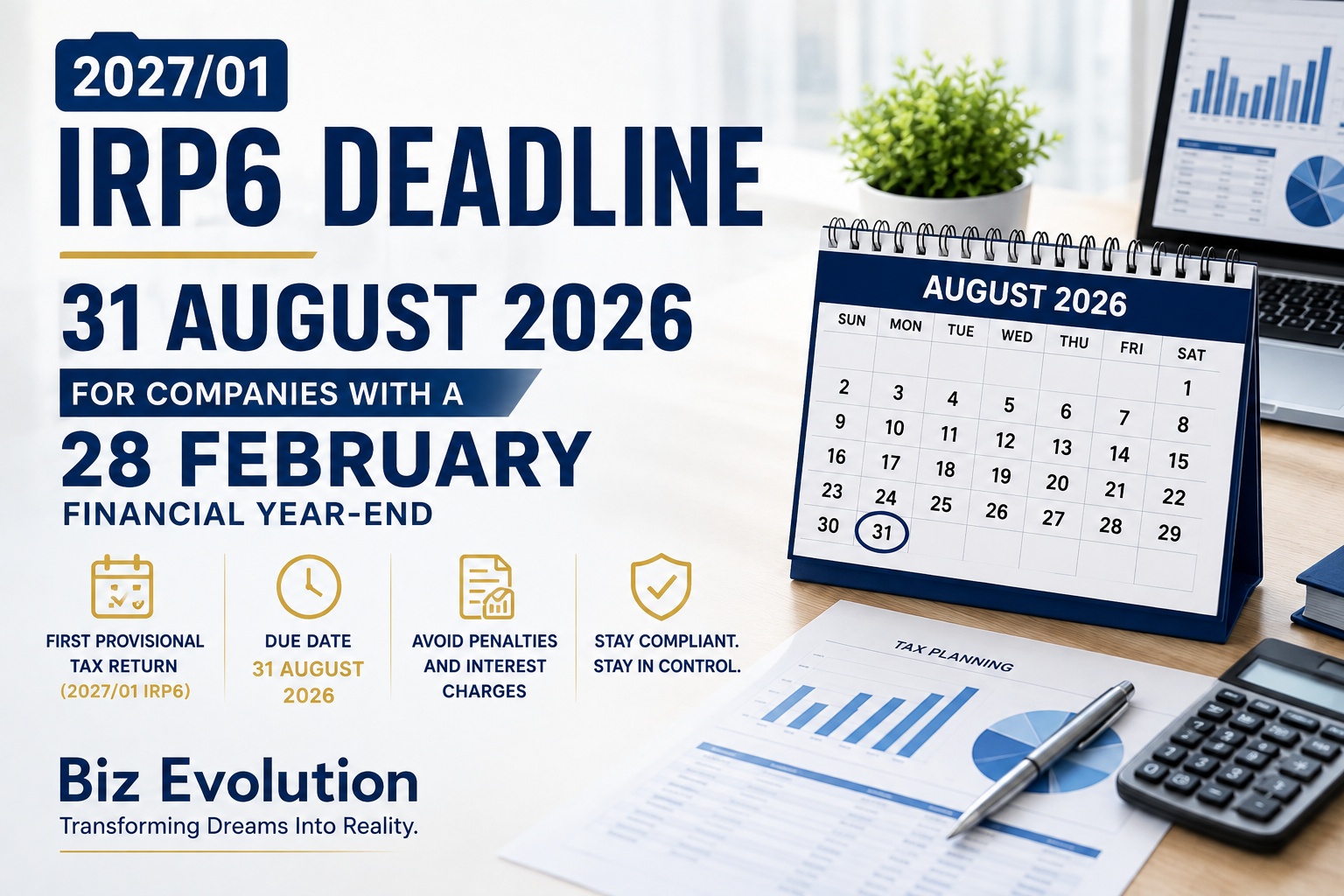
Missing a SARS tax deadline can feel overwhelming, especially when that 28 February date passes and reality sets in. If you’re a company with a February financial year-end, this deadline usually applies to IRP6 provisional tax submissions and ITR14 company income tax returns.
The good news? Late doesn’t mean hopeless. But delays do come with consequences, and acting fast can save you money, stress, and long-term compliance issues.
Contents
Why Tax Submission Deadline Matters
For companies with a February year-end, 28 February is a critical SARS cut-off. By this date, SARS expects:
- Accurate IRP6 provisional tax estimates
- Submission of ITR14 company tax returns (where applicable)
Missing this deadline triggers a chain reaction that affects your penalties, interest, compliance status, and even your ability to do business.
1. Administrative Penalties Add Up Quickly
One of the first consequences of a late submission is administrative penalties.
- SARS can impose fixed monthly penalties for outstanding returns
- Penalties continue to accumulate until the return is submitted
- Even nil or dormant companies are not exempt
Many businesses assume penalties are once-off — they’re not. Leaving returns outstanding for months (or years) can result in surprisingly large penalty balances.
2. Interest on Unpaid Tax Can Snowball
If your IRP6 estimate was late, incorrect, or understated, SARS will charge interest on unpaid tax.
This means:
- Interest accrues from the original due date
- Underestimated provisional tax may trigger additional penalties
- Cash flow pressure increases over time
What feels like a small delay can quietly turn into a costly problem — especially if SARS later issues an additional assessment.
3. Your SARS Compliance Status Is at Risk
SARS closely tracks filing behaviour. Late or outstanding submissions can lead to a non-compliant status, which may:
- Flag your business for audits or reviews
- Block refunds or delay assessments
- Raise red flags with banks and regulators
A non-compliant status doesn’t just affect SARS — it affects how credible your business appears to third parties.
4. Non Compliance Tax Status
Need a Tax Compliance Status (TCS) Pin for:
- Tenders
- Funding or overdrafts
- Supplier onboarding
- B-BBEE verification
If your returns are late or penalties unpaid, your tax status will be non compliant.
This often catches businesses off guard, especially when opportunities are time-sensitive.
What to Do If You’ve Missed the Deadline
If you’re already late, here’s what matters most:
- Submit outstanding returns as soon as possible
- Correct inaccurate IRP6 estimates before assessments escalate
- Request penalty remissions where applicable
- Get professional help to prevent repeat issues
The longer you wait, the fewer options you have.
Late Doesn’t Mean Hopeless — But Fast Action Matters
SARS penalties are real, but they’re manageable with the right strategy. Acting quickly can reduce interest, restore compliance, and protect your business reputation.
Need help fixing late IRP6 or ITR14 submissions?
Biz Evolution helps businesses get back on track — accurately, efficiently, and with SARS compliance in mind.